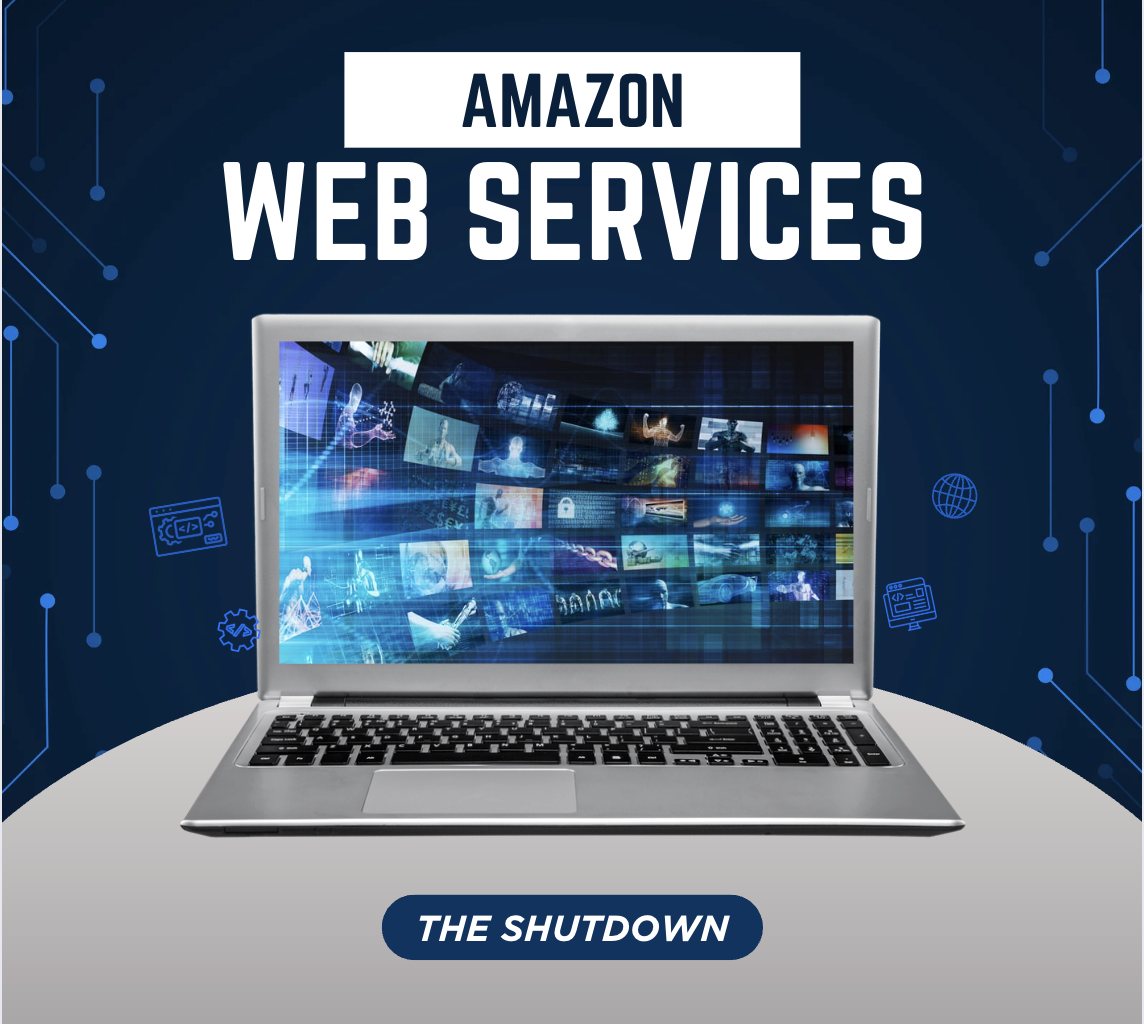
On Oct. 20, 2025, Amazon Web Services (AWS) went down, cutting millions of people off from websites, deactivating banks, disrupting hospital communication and more. The technology affected by this shutdown included that of Arlington Public Schools’ (APS) technology. Websites such as Canvas, StudentVUE and MyAccess were inaccessible, preventing students from completing homework during their day off.
AWS is owned by Jeff Bezos and generates billions of dollars in revenue each year. According to the Amazon AWS Overview, this web service appeals to many types of businesses due to its wide range of features and its ability to adapt to different business models.
“New services can be provisioned quickly, without the upfront fixed expense. This allows enterprises, start-ups, small and medium-sized businesses, and customers in the public sector to access the building blocks they need to respond quickly to changing business requirements.”
Partly due to this flexibility, AWS has gained popularity worldwide, enabling it to expand significantly. AWS was launched in 2002 and has since become the world’s largest cloud computing company, controlling approximately 37% of the overall cloud market. This scope largely explains why the shutdown had such widespread effects.
Since the shutdown, many have expressed concern about the scope of AWS, believing that it is dangerous for the cloud to be controlled by so few companies. In an article, CNN explained that many alternative web services cannot match the reach of Amazon, Microsoft and Google.
“It took a day without Amazon Web Services for Americans to realize how reliant the internet is on a single company.”
Some say this is an overreaction or a cynical point of view; however, other groups, such as the Harbor Technology Group, argue, from an economic standpoint, that AWS’s scope is dangerous. If one company controls so much of the business technology, then when issues arise, the economy may decline, leaving many businesses extremely vulnerable.
“The outage exposed systemic vulnerabilities in supply chain logistics, disrupted customer service channels, and hampered essential internal workflows, from payroll processing to inventory management. These operational setbacks caused not only direct revenue loss but also longer-term reputational damage.”
According to CRN, the outage was caused by “two automated systems updating the same data simultaneously,” a cause which many argue demonstrates the dangers of a monopolized cloud. A simple mistake had a global impact.
APS likely uses AWS for similar reasons to small businesses, as the flexibility is seen as beneficial in educational technology. Although APS is a small, less commercial AWS user, the shutdown still affected APS students and teachers. During the shutdown, many students were unable to complete homework and teachers were forced to extend deadlines.
The shutdown resulted in plummeting trust in AWS and damage to the global economy. However, the true impact of the shutdown was an increase in awareness of the importance of web service providers. Considering the impact on the local community as well as the wider global impact of the scope of AWS is important in order to understand the advantages and disadvantages of having a highly centralized cloud.