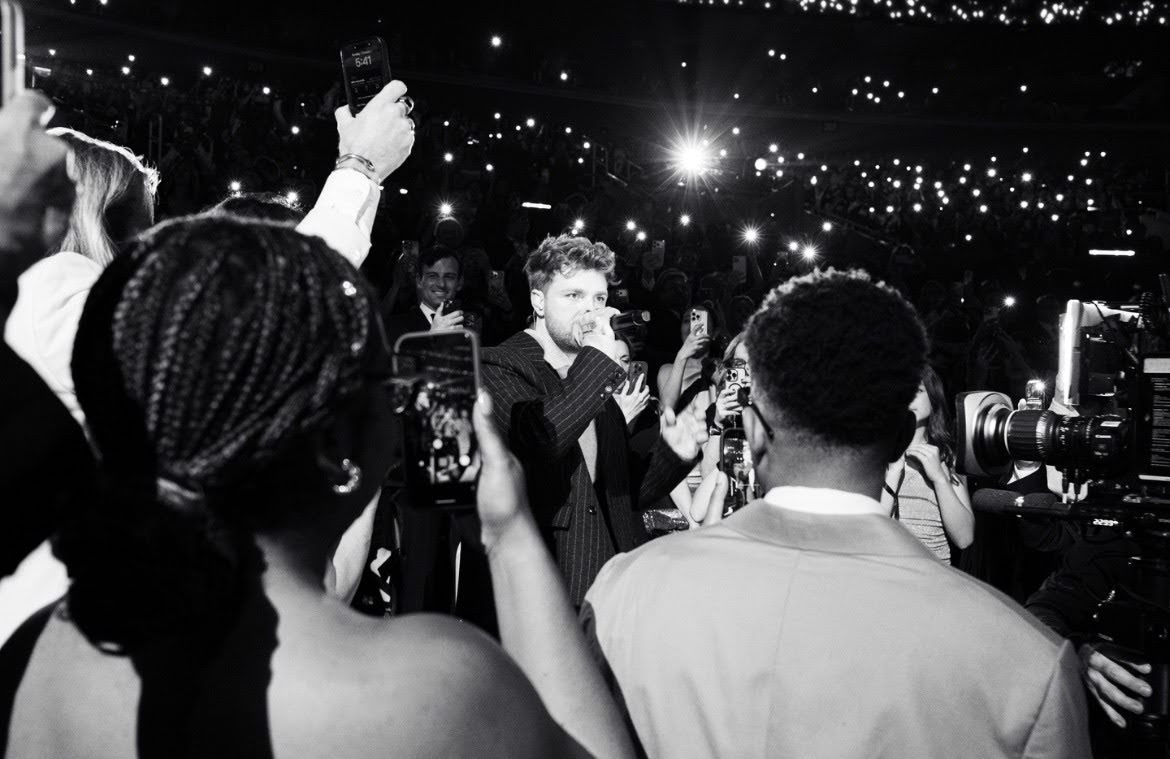
Country singer Zach Bryan’s sixth studio album, “With Heaven On Top,” was released on Jan. 9, 2026. Bryan announced the album on an Instagram story in Feb. 2025, saying, “‘With Heaven On Top,’ the EP is out sooner than not.” This official announcement of a new album raised high hopes among Bryan’s fans, as he is known for his vivid storytelling, captivating lyricism and unique instrumentalism. In addition to a studio album, Bryan also released an acoustic version of “With Heaven On Top” on January 12, explaining, “I’m assuming this record is just like all the other ones, and there’s gonna be a billion people saying it’s overproduced.” With a set list of 25 songs that make up the album, totaling around an hour and 18 minutes, “With Heaven On Top” tackles a variety of topics relevant to Bryan’s life, whether it is growth, change, heartache or love.
Official tracklist for “With Heaven On Top”:
“Down, Down, Stream”
“Runny Eggs”
“Appetite”
“DeAnn’s Denim”
“Say Why”
“Drowning”
“Santa Fe”
“Skin”
“Dry Deserts”
“Bad News”
“South and Pine”
“Cannonball”
“Slicked Back”
“Anyways”
“If They Come Lookin’”
“Rivers and Creeks”
“Plastic Cigarette”
“You Can Still Come Home”
“Aeroplane”
“Always Willin’”
“Miles”
“All Good Things Past”
“Camper”
“Sundown Girls”
“With Heaven On Top”
My Personal Rankings
“Down, Down, Stream”
The first track of the album is not a song, but one of Bryan’s occasional introspective poems. “Down, Down, Stream” is filled with vivid imagery as Bryan moves from buying a house from a man in New York in an “Oklahoman landscape with greens, moisture and heat,” perhaps alluding to his hometown of Oologah, Okla. While wandering through the wilderness, Bryan comes across a stream where he reflects on his life and the impact his actions have on him and others. The stream Bryan details ultimately serves as a metaphor for how all our actions are interconnected and explores the idea of acceptance as he studies it and sees “every good and bad thing that ever happened to me floating down, down stream.”
I rate this poem four out of five stars because I was anxiously waiting for each line, and it instantly captured Bryan’s emotional honesty and ability to capture unique feelings so beautifully. The barrage of images he instills in the listener adds a raw, reflective tone to the poem. “Down, Down, Stream” captivated me so significantly that I was prompted to reflect on my own life, the things I have done and the people I have met and loved. Overall, the metaphor of a stream flowing gently, carrying memories, hopes and regret, is a powerful message that we are shaped by who is in our lives and what we have experienced.
“Runny Eggs”
This track is the first actual song on the album and one of my favorites. In it, Bryan is constantly on the move, searching for something that can make him a better person. Whether he is in California, Spain, Red Rocks, Colorado or back in Oklahoma, he is constantly trying to figure out how to be loving and kind. Bryan eventually admits his flaws at the end of the song, but leaves the listener with a theme of reflection in the lines “How you thought you was a gentlemen back when you was young/Maybe I’ll find Jesus when the morning comes.” I loved the lyricism in this song and how it depicted Bryan’s regret for his past mistakes, as well as his longing to be someone to be proud of, something I am sure many other teenagers can relate to. Overall, I rate this song three out of five stars, because I was able to relate to the lyrics and the variety of places mentioned throughout the song captured my attention.
“Appetite”
The third track of “With Heaven On Top,” “Appetite,” is undoubtedly one of, if not my favorite, song from the album. Right away, multiple brassy instruments kick in at the beginning of the song, setting a fast-paced tempo and evoking a whirlwind of emotions Bryan is experiencing. The song’s lyricism was very reflective, with Bryan navigating self-doubt, restlessness and the tension between growing up and resisting the life others expect of him. The main thing he is struggling to explore is the possibility of having children, as is evident in the prechorus “‘Cause what if I don’t want children to grow up like their father?/ Willing to stir s—t up and start a fight/give themselves up an appetite.” Ultimately, Bryan needs to determine if he should have children and pass down his toxic characteristics, while recognizing the pattern he has of making mistakes and hurting other people to fill his “appetite.” I rate “Appetite” five out of five stars because it was hard for me to relate to the song. I found the topic very interesting and the instruments very captivating. The ironically upbeat melody made me want to dance, and the chorus was very catchy.
“DeAnn’s Denim”
“DeAnn’s Denim” was an intense, emotional song that tackled a complex, heavy topic. It is set around the life of DeAnn, Bryan’s mother, who passed away due to alcoholism. This song portrayed the addiction played in their lives, setting up the question: how does one overcome that addiction and harmful genetics?
In the beginning of the song, Bryan reminisces on his mother and the pain he carries due to her passing and her addiction, stating “And I miss times I drank ‘cause I’d never overthink/and I never gave into this lore.” Moving into the chorus, Bryan asks himself and the listener, “Are you strong enough to stay away from family genes?/ ‘Cause DeAnn’s denim was a stubborn thing.” I love the message this song sends. The lyrics showcase how difficult it can be to overcome addiction, especially if you have a genetic disposition to it. Overall, I rate this song three out of five stars because the lyrics were beautiful, and the song’s message had me reflecting on my own life and who I want to be.
“Say Why”
Opening with the shuddering stomp of a hollow beat, exuberant horns, the sharp pull of acoustic strings and the distant sound of a violin, “Say Why” is a celebration of sounds. In the song, Bryan sings of heartbreak and angst, as he spent his last dollar “on some courage I could buy” and “forty days walking and another forty high.” just for his lover to give him “forty reasons for goodbye.” This chain of events prompts him to beg for answers in the chorus, where he implores his lover to “say why” and tell him why they can’t be together after he has tried so hard to be a better person.
The use of 40 in so many lines of the song has fans speculating that Bryan used the number 40 to represent the challenges he had to endure to better himself to get his lover to stay with him, as the number forty in the Bible marks the length of time that people experience a test from God. I give “Say Why” three out of five stars because the chorus was very catchy, and the culmination of multiple instruments made the melody very intense and emotional, yet energetic.
“Drowning”
The sixth track of the album opens with several brass instruments that complement Bryan’s low-registered vocals. The song emphasizes drowning in a relationship and losing yourself as you drown in who your lover is. In an emotional chorus, Bryan details “I ain’t never been this deep before/and the more I sank Lord the more I swore/from the waterline to the ocean floor/ drowning’s just a lover’s chore.” Throughout the song, Bryan touches on how he lost his sense of self while in a relationship and how he wanted to drown himself in his lover, seemingly the only acceptable way of loving someone to your fullest capacity. As he gets deeper into the relationship, he realizes how much he has sacrificed in order to make his lover happy and how his loss of identity has weighed on him, essentially “drowning” him.
I rate “Drowning” three out of five stars. I really enjoyed this song because it showed how much people have to sacrifice when in a relationship, and how to love someone does not always mean losing who you are, which is a valuable lesson for anyone to learn.
“Santa Fe”
As soon as “Santa Fe” began, I could immediately tell this was going to be very energetic and upbeat, and it will definitely be very fun for Bryan to play live. The use of the guitar, horns and mandolin evokes feelings of joy and carefreeness, as Bryan declares, “Think I’m going to Santa Fe/the type of place they won’t know my name.” With vivid imagery of open skies and desert roads, Santa Fe serves as an escape from reality for Bryan, where he can be himself and let loose. I loved how upbeat the tune of this song was, as Bryan ultimately evades all responsibilities and embraces the chaotic environment of Santa Fe. Overall, I rate “Santa Fe” five out of five stars because it is very easy to dance to and I think it is a great song to play in the summer thanks to its infectious energy and jubilant nature.
“Skin”
The eighth track of “With Heaven On Top” is an intense, complex breakup song, possibly about Bryan’s high-profile relationship with Brianna “Chickenfry” Lapaglia. Throughout the song, the vivacity of Bryan’s anger and resentment are apparent through emotional lyricism. The song starts with Bryan asking rhetorical questions to his estranged partner, but it is not until the chorus that we see how deeply his emotions run in this breakup. In the chorus, Bryan emotionally declares “I’m taking a blade to my own skin/and I ain’t never touching yours again,” potentially alluding to the matching tattoos he and Lapaglia got with lyrics of his song “28.”By taking a knife to his own skin and attempting to remove his tattoo, Bryan is ridding all traces of his ex-lover from his body in order to purify his mind. This tone of anger and anguish adds an underlying tension to the song, exemplifying the menagerie of emotions Bryan navigates as well as the consequences of the end of a relationship.
I rate this song three out of five stars because I really resonated with how poignant the lyrics were. The declaration of never again touching his ex’s skin shows how emotionally intense relationships can be, which I think is an interesting message.
“Dry Deserts”
Similar to “Santa Fe,” “Dry Deserts” is very upbeat, fast-paced and is filled with love and longing. Depicting a California landscape, Bryan dares to ask his love how devoted she is to being with him, asking “Would you cross dry deserts babe?/Would you cut through pines?/Would you swim upriver when I’m surely on your mind?” depicting various adventures he has had with his lover, Bryan simultaneously expresses how he yearns to be with her and have fun with her, as he has been without love for so long. He expresses that he is always thinking of her, saying “….you’re always calming me, only in these dreams,” and wants to know how devoted she will be to him. Overall, I rate this song five out of five stars for its amazing instrumentation. The utilization of an electric guitar and drums sets up a hopeful, dreamy and lustful tone as Bryan pleads with his lover to be with him. “Dry Desserts” is a perfect song for a road trip, as it is easy to blast this song full volume, stare out the window and daydream.
“Bad News”
The 10th track of the album, “Bad News,” is a politically-charged song that tackles America’s deep divisions, criticizing the harsh use of Immigration and Customs Enforcement (ICE) raids while expressing love for the country and its diversity, highlighting the need for unity. In Verse 1, Bryan declares “And ICE is gonna come bust down your door”, following up with “I got some bad news/the fading of the red, white and blue.” The imagery of the fading of the red, white and blue is Bryan’s depiction of the recent violence in America, with a loss of compassion and civility in society. In the chorus, Bryan poses an essential question, “This land’s your land/this land’s mine too/ is this all true man?/ Or is it just bad news?” Through deep lyricism, Bryan questions whether the government believes that different cultures should all be treated equally and illustrates the damage ICE has done to people across the nation. Bryan closes the song by detailing the fading of American values and the country’s greatness, both ultimately due to intense political fragmentation that spews hatred and vitriol. I rate this song four out of five stars because I think it is important for influential people to raise awareness of what is happening in the world, and the depiction of different political beliefs helps explain the fragmentation of America.
“South and Pine”
“South and Pine” is a reflection of a relationship that is coming to an end. Accompanied by strings, Bryan depicts New York City summer nights. The theme of accepting the end of a relationship is established as Bryan details “Used to call a lover mine/That’s why it is raining in my mind/And love and loss, and lightning strikes.” Throughout the track, Bryan visits memories he has of his lover that are tainted by heartbreak, acknowledging the beauty of the relationship in the lyrics “But if you could see her now in her New York City gown/Dancin’ with her heels on South and Pine” before drawing the conclusion that although the separation is painful, it is better off the lovers aren’t together, “Another day you’re dancin’ in my mind/Another day you’re better off not mine.”Overall, “South and Pine” demonstrates the message that it is better to let someone go and accept their exit from your life than to obsess over what could have been. I rate this song three out of five stars because it paints a captivating picture of warm New York City summer nights and carries an important message that can be applied to various relationships and to protecting mental health.
“Cannonball”
“Cannonball,” the 12th song on the album, is a memoir-style song that draws on adventures and memories. In the song, Bryan details traveling to Reno, Nev., the Pacific Coast Highway and Yosemite National Park with a now estranged but once-close friend or lover. The main destination that holds significance for Bryan and his former companion is Cannon Beach, where Bryan says, “Laid in the sand and, man, I have never seen/Something more beautiful than you and your cannonball.” The recurring description of Bryan’s companion’s “cannonball” shows how close the two people were. However, as their relationship changes and they break apart, the memories shift, as “There are cannonballs falling in the heat of July,” signaling the collapse of their relationship. Overall, “Cannonball” is an exploration of the stories the two made together and how they are tinged by resentment and personal change. I rate this song three out of five stars because I liked the vivid storytelling and how the intensity of the guitar adds emotional depth to the explored relationship.
“Slicked Back”
“Slicked Back” is one of my favorite songs and one of the greatest love songs on the album, an ode to Bryan’s wife, Samantha Leanord, and all the good she has brought into their lives. With the aid of an electric guitar, Bryan describes his girl as cool and charismatic, a free-spirited loving soul. It is clear Bryan is infatuated with her, as in the chorus he writes, “You’re so cool in my living room/And when you talk trash with your hair slicked back/“When I get to Hell or Heaven, can I bring my girl?/’Cause she likes romance, good sex, music, and ruling the world.” This song is a declaration of Bryan’s deep love for his wife and his devotion to staying by her side through everything life throws at them.
I rate “Slicked Back” five out of five stars due to its catchy melody and rhythm, fun lyrics and the electrifying electric guitar solo at the end of the song.
“Anyways”
“Anyways” is set during a dark time in Bryan’s life, when he was facing anxiety and self-doubt, but someone helped guide him through it and told him to be brave. The person helping him insists that to get out of the dark space he is in, he must conquer his fears and do what he loves: play music. This guiding figure encouraged him by saying, “‘Don’t stop it now/Still got that dreamer in your eye/Saw you back when you played West Virginia/When you were too scared to go on stage/But played anyway.” The message of doing something even though it is scary is strong in “Anyways,” with Bryan learning that those who are rooting for your downfall are weakened when you do not give up. I rate this track four out of five stars because I loved the overall message of the song and the instruments all tied together nicely, particularly the guitars.
“If They Come Lookin”
If there is one thing Bryan is well known for, it is his storytelling and captivating lyricism. In “If They Come Lookin,” Bryan depicts being on the run and trying to avoid the consequences of a crime he committed while traveling to various rural places, such as the “Red River.” The song has a frenzied tone, capturing chaotic and desperate emotions, similar to other older-style outlaw country tales. The chorus“So if they come lookin’ tell ‘em I’m on the run again/Chasin’ the sun again out of my mind/ They come lookin’, tell ‘em that I died again/Crossin’ state lines again, wishin’ I was home,” describes the long chase between the pursued and the pursuer. Overall, I rate “If They Come Lookin’” five out of five stars because Bryan’s vivid storytelling drew me in and captured my attention. It was interesting to hear about the experience of a fugitive, and the overall message that crossing certain lines can exile you from your normal life is an important and interesting idea. I think fans of action movies will be particularly drawn to this song, as the narrator’s avid run from authority is very interesting.
“Rivers and Creeks”
The 16th song on the album, “Rivers and Creeks,” is a Springsteen-esque song that is rooted in the ebb and flow of love and loss. The song opens with an electric guitar coupled with a harmonica-style melody, creating an intimate sound as Bryan’s vocals begin. The lyrics are heavy with imagery and personal anecdotes, as Bryan begins the song by detailing how love can result in loss, as seen in the lines “Had a friend in Cincinnati who died with a six-shooter taped to the roof of his mouth/’Cause his girl was making love to a man who’ll never give her what she needs.” The danger of desire and the harm it can ultimately bring is echoed in the second verse, as the bridge crystallizes the central metaphor “Well, love is just a river, yeah, love is just a creek/Leadin’ to the slaughter with the big, white teeth.” With this chorus, the idea that love hurts people as the central theme of the poem is solidified.
I rate this song two out of five stars because while the main message of the song is interesting and well established, Bryan’s vocals give off the impression that he is attempting to sound like Springsteen, and the resulting sound is not very pleasant. However, the incorporation of several personal stories adds a layer of personality to the song, which kept me interested and waiting to see what the next lyrics would reveal.
“Plastic Cigarette”
“Plastic Cigarette” is a reflective, melancholic track exploring superficial love in a relationship where emotional connection is unattainable. The song begins with Bryan addressing the end of his relationship, mournfully revealing “Well, I ain’t written a love song in so long.” In Verse 2, Bryan then asks his lover if they managed to change and escape the hole of toxicity., “Did you ever make it back to Byron Bay the day you told me to quit drinkin’? And thinkin’ that I was gonna die before thirty” before moving to the chorus “So let me go, I saw you on the river’s edge/ Draggin’ on a plastic cigarette”. The “plastic cigarette” Bryan refers to symbolizes a relationship or habit that is unhealthy and artificial as his lover “hate[sic] the smell of real smoke,” signaling the lack of connection and love between them. Overall, I rate the song three out of five stars because the chorus was packed with meaningful lyrics and made me reflect on how I treat others.
“You Can Still Come Home”
“You Can Still Come Home” is a song rooted in nostalgia, familial connection and the enduring comfort of home. From the very first strums Bryan’s guitar establishes a slow, somber tone with Bryan adopting a gruff vocal delivery that is heavy with loss, “It ain’t been shot since she got caught/With cancer growing down her lungs” and loneliness, “When you’re down bad in a tax cab, you gave all/You had to some drunker crowd in New Jersey.” However, the chorus of the song assures the relative Bryan is talking about that they will always have family to comfort them, as Bryan reassuringly asserts, “Yeah, you can still come home.” Through a consistent beat and emotionally stirring lyricism, Bryan establishes the notion that familial love never goes away. Ultimately, I rate this song two out of five stars because even though the message of the song was touching and explored complex familial relationships, the song was very slow and repetitive.
“Aeroplane”
“Aeroplane” is a reflective song that focuses on moving on, personal growth and navigating different paths of life after a relationship ends. The lyrics contrast a former partner settling down as Bryan describes “She got married on the porch last June” with the narrator’s own journey of traveling, accepting change and moving forward detailed, as they are “.. on an aeroplane bound for Spain.” The aeroplane the narrator is on symbolizes escape, moving away from the past and exploring a new, uncertain future. Ultimately, the song captures the bittersweet feeling of watching someone you love move on while you continue on your own journey to grow and explore other aspects of life.
I rate “Aeroplane” four out of five stars because the message of acceptance and letting someone go resonated with me deeply, and I think lots of people can apply it to their own lives with romantic, friendship or familial relationships.
“Always Willin’”
“Always Willin’”, situated in dark, isolated Arizona explores themes of personal brokenness, spiritual redemption and relentless “hell-bent” resilience. Bryan’s lyrics acknowledge his faults by declaring “And I know that I’m hell bent and always will be” but depict that he is trying to find redemption and better his soul through religion “But at least God knows I was always willing.”The song then progresses as Bryan’s mindset fully embraces being saved in the hands of God, claiming that “God ain’t a man in a two-piece suit/And he’ll come find you when it’s time.” The theme of acknowledging your faults but refusing to let your sins define who you are is well established in “Always Willin’,” and I think it is an important message for anyone out there who may be struggling. I rate this song four out of five stars because I think the message can resonate with a lot of people and even help them not give up on themselves, no matter how they have sinned.
“Miles”
The 21st track of the album, “Miles,” explores themes of feeling lost, the emotional weight of long travel and the struggle to escape unhealthy habits. In the first line of the song, Bryan claims “These yellow lines go on forever,” with “yellow lines” symbolizing a deep longing for stability and normalcy.. Bryan also details toxic habits he has and how they affect him, stating “I’ve been drinking wine for breakfast” and “spend my whole life running from/All the things I could become, they call it potential.” Bryan’s struggles without a home is laid out in this song, with Bryan eventually acknowledging that he as long way physically to travel before he reaches home as well as a long road mentally to better himself before he finds someone to make a home with, claiming “I got miles, I got miles, I got miles/Until I’m finally home.” Overall, I rate this song five out of five stars because the theme of not having a home due to traveling and unhealthy habits showed me that it is important to learn how to take care of yourself, no matter the situation you are in.
“All Good Things Past”
“All Good Things Past” is a song rooted in nostalgic wistfulness, reflecting on the often painful transition from idyllic past times to the present while navigating personal heartbreak. The song suggests a yearning to return to normal life, where good memories were made. In verse 1, the narrator shares how his life has gone sour “Well, all good things past/ and your boy got himself into some trouble again,” indicating a change of events from good times to bad. The narrator then goes on to recount old memories, such as “Oklahoman popsicles” and “cold Philadelphian winter streets”, before eventually acknowledging that all good aspects of life have escaped him and he can never go back to feeling carefree. I rate “All Good Things Past” five out of five stars due to vivid imagery, deeply conveyed emotion and for prompting me to reflect on my life.
“Camper”
“Camper” is a deeply intimate and romantic song that explores themes of longing and vulnerability. Taking place in a camper under a dark California night, Bryan depicts he and his lover making love, prompting Bryan to reflect on how to allow his partners to access the vulnerable, emotionally fragile side of him, “Drive through the night just to try and understand her/Why she’d ever wanna call that cowboy mine.” The imagery of being in a confined, constrained place, or of being in a camper, symbolizes the narrator learning to accept his flaws, insecurities and emotions in an intimate relationship.
I rate “Camper” four out of five stars because the lyrics are beautiful and the harmonies Bryan creates, which gives me chills, adds more emotion and fragility to the song.
“Sundown Girls”
“Sundown Girls” is a beautifully constructed song that relies on strings, particularly the acoustic guitar and banjo, to create a warm and joyful atmosphere for the listener. With two verses, the song is short but conveys how lucky Bryan is and how much of a monumental year 2025 was for him. Referencing his concert at Hydes Park in June 2025, Bryan feels amazed that his music has impacted and resonated with so many people, “Played out at Hyde Park, oh, and the night stars/Slowly came around/First time in so long I’d seen lips sing along/In the back of a crowd.” The chorus conveys the euphoria Bryan has experienced on adventures with those he loves “The road goes on ‘til it ends/We’ll feel alive tonight ‘til about 4 or 5,” and how life, or “The road,”is so meaningful when it is filled with love and support.
Overall, I rate “Sundown Girls” four out of five stars because the imagery of Hyde Park and warm summer nights was very comforting and captivating and the lyrics were simple yet beautiful as they were encased in love and gratitude.
“With Heaven On Top”
The title track of the album, “With Heaven On Top” is a beautifully constructed end to the album. It tackles various aspects of Bryan’s life, as he is “Gonna fight, gonna cry, gonna fall in love”, “Drive to California and surf the coast” and “Fight for our flags in a foreign state”, referencing his time in the military. The chorus, “You’ll have, with Heaven on top” emphasizes that even when going through trying times, you can always find a saving, protective or hopeful perspective about life. The addition of an instrumental break before the final recitation of the chorus is beautiful, illustrating that a place of love, peace and beauty is attainable.
Overall, the song “With Heaven On Top” is five out of five stars, because it has a beautiful message that I think will resonate with others who are going through difficult times. The simple yet powerful lyrics combined with the grand, soothing instrumental break result in a musical masterpiece that establishes the notion that no matter what happens to you, you will always be protected.
Overall, I loved Zach Bryan’s new album. There were only a few songs I did not enjoy as much as others, but that is only because the sound was quite repetitive. However, Zach Bryan did an amazing job conveying complex emotions into beautiful lyrics. I will definitely be blasting the album nonstop. Below is my final ranking of the 25 tracks with the first place song being my favorite and the 25th place being my least favorite:
“Appetite”
“Down, Down ,Stream”
“Runny Eggs”
“Slicked Back”
“DeAnn’s Denim”
“Drowning”
“Say Why”
“Cannonball”
“South and Pine”
“Santa Fe”
“Dry Deserts”
“Skin”
“Bad News”
“Anyways”
“Miles”
“If They Come Lookin’”
“Plastic Cigarette”
“You Can Still Come Home”
“Aeroplane”
“All Good Things Past”
“Always Willin’”
“Sundown GIrls”
“Camper”
“With Heaven on Top”
“Rivers and Creeks”